
A lightweight education tech stack
How to pack light and move fast.

This post is part of a series of “Tools,” giving you tools and guidance to implement them in your product education strategy.
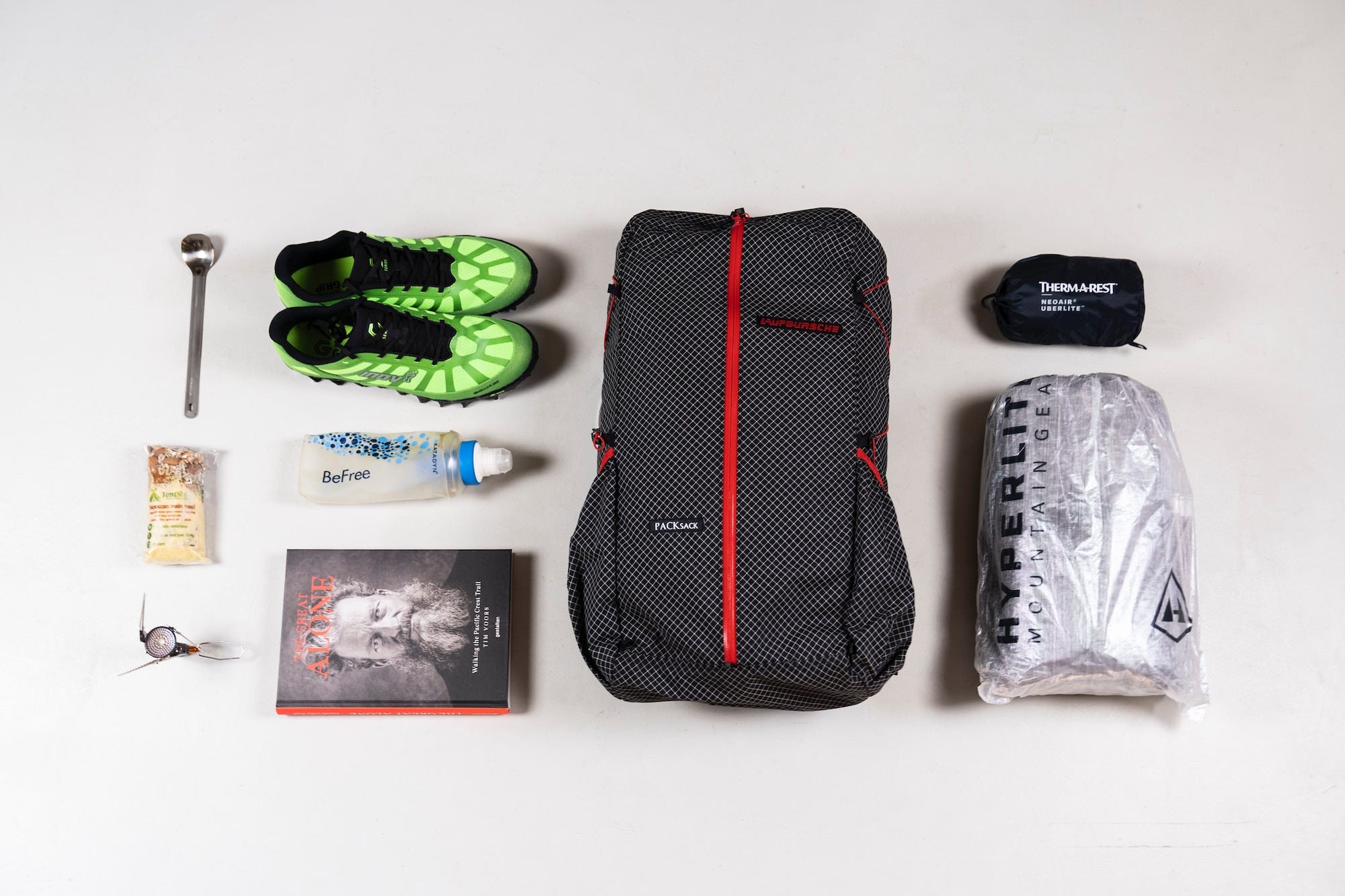
Lightweight backpackers go to extremes to save ounces and grams of weight in their packs; they’ll cut off the ends of toothbrushes, dehydrate food ahead of time, and more, to save weight. The cumulative effect of an ounce here and there adds up and makes all the difference on long adventures.
This approach is not quite what I’m suggesting, but it’s not too far off either. For small or young companies, packing light and moving fast (and including a few creature comforts along the way) is critical to building a sustainable product education program.
Pack light
If you’re like me, it’s easy to want to do too much too soon - like building complex long-term strategies, investing in more mature tools that do way more than you need right now, and designing intricate processes that will endure for years ahead. While tempting, you’ll find yourself in a bind if you pack too much in your bag.
Here are the categories that make up the core components of a lightweight education tech stack:
A Content Management System to write and organize content
Media assets that can be easily and consistently produced
A delivery platform to publish and host your content
Communication channels to market your content
Feedback and analytics to improve your content
If I were starting fresh at an early-stage company, here’s the $95/mo. tech stack I would use to start getting content out to customers:
Webflow for site design and content management (
$23/mo)Arcade for interactive media (product demos, help docs, tutorials) (
$42.50/mo)Descript for video production and distribution (
$12/mo)Google Analytics for user insights and reporting (
free)Writer to help spin up content, improve grammar, and maintain a style guide (
$18/mo)Airtable to create a content pipeline, build reports, and pipe in data (
free plan to start)Zapier to connect platforms as needed (
free plan to start)Social platforms for wider distribution (I’m no marketer, so I won’t attempt to delve into that world)
Read on for more guidance on tools and how to stay responsive to customer needs ↓
Content Management System
The market is flooded with CMSs, so you’ll benefit from asking around to see what others in your specific space are using. A few standouts (ordered from simple to complex) to get you started include:
Media assets
Creating media assets - like images, videos, and interactive media - can be as simple as taking screenshots on your device, or as complex as highly produced and designed videos. My recommendation: find one or two tools that help you simply and consistently produce the assets you need to teach customers about your product.
These are my favorites at the moment:
Images: Pika, screenshotr
Delivery platform and communication channels
This might be your CMS, but that’s not always the case. You might push content out to your company’s website, online communities, social platforms, and more. This might seem obvious but it’s worth mentioning because the options are practically endless. Your organization may or may not already have a perspective on where educational content should live, but what’s important is deciding what are the most impactful channels to make your content available.
Feedback and analytics
You need data—both qualitative and quantitative—to learn from your customers. Here are a mix of analytics and feedback tools worth checking out.
Move fast
Now that your bag is packed, it’s time to hit the trail. Moving fast doesn’t mean that you’re in a rush but that you’re nimble. If you’re in the wilderness with just what you can carry on your back, you’ll be able to explore hard-to-reach places, easily move camp, and not get bogged down in managing all of your belongings.
For product education, this means that you can:
Be more responsive to customer needs.
Quickly ship content as your product evolves.
Keep costs low with tools that you can adopt and abandon as needed, rather than purchasing long-term contracts with prominent, established vendors.
Reduce complexity in your ecosystem (systems, processes, integrations, comms, tools, etc).
Spend more time creating content and less time managing your systems.
Embrace tradeoffs
Speed and flexibility often come with tradeoffs; for example, if you have an off-the-shelf CMS, it may lack certain customizations or functionality that could help you or your customers. In fact, this is almost always the case if you don’t build a custom solution from the ground up. Accepting these tradeoffs is a business decision that can be embraced through collaborative decision-making and clear communication within your organization.
Include some creature comforts
Even the most die-hard lightweight backpackers give themself some kind of indulgence, like a soft pad to sit on, or a way to make fancy coffee (hello Aeropress). Packing light and moving fast doesn’t mean you don’t use the tools you need to make life a little easier and more enjoyable.
For product education, some creature comfort tools might include:
A tool to automate repetitive tasks or communications that take too much time. Zapier and Make are two industry leaders in this space and each have free and paid plans.
A service to help you write and improve content, like Grammarly or Writer. These types of tools can save you time and ensure accuracy and consistency in your content.
Stock images to reduce the load on branding and design. Websites like Unsplash provide royalty-free images to use for commercial purposes. Canva can help with all sorts of visual design needs.
Stepping outside of tools for a moment, creature comforts can take many forms. Maybe you only commit to releasing content once a week rather than ad-hoc to introduce more structure in your life. Or you give yourself a few dedicated and uninterrupted hours a day just to create content. Or heck, maybe it’s just a little budget for some excellent coffee to give you some joy and much-needed energy throughout the day.
Whatever it is, remember that what you pack in your bag is meant to help you enjoy the adventure. If that means a few extra ounces (or a little more budget for an extra tool), pack it if you can.
Enjoy the adventure
Building an education strategy and implementing tools is quite an experience; there are complex challenges to overcome, opportunities to deliver content that helps your customers, and tools to learn and leverage. Enjoy the adventure!