
Customer education that doesn't scale
Building contextual help for small products and teams

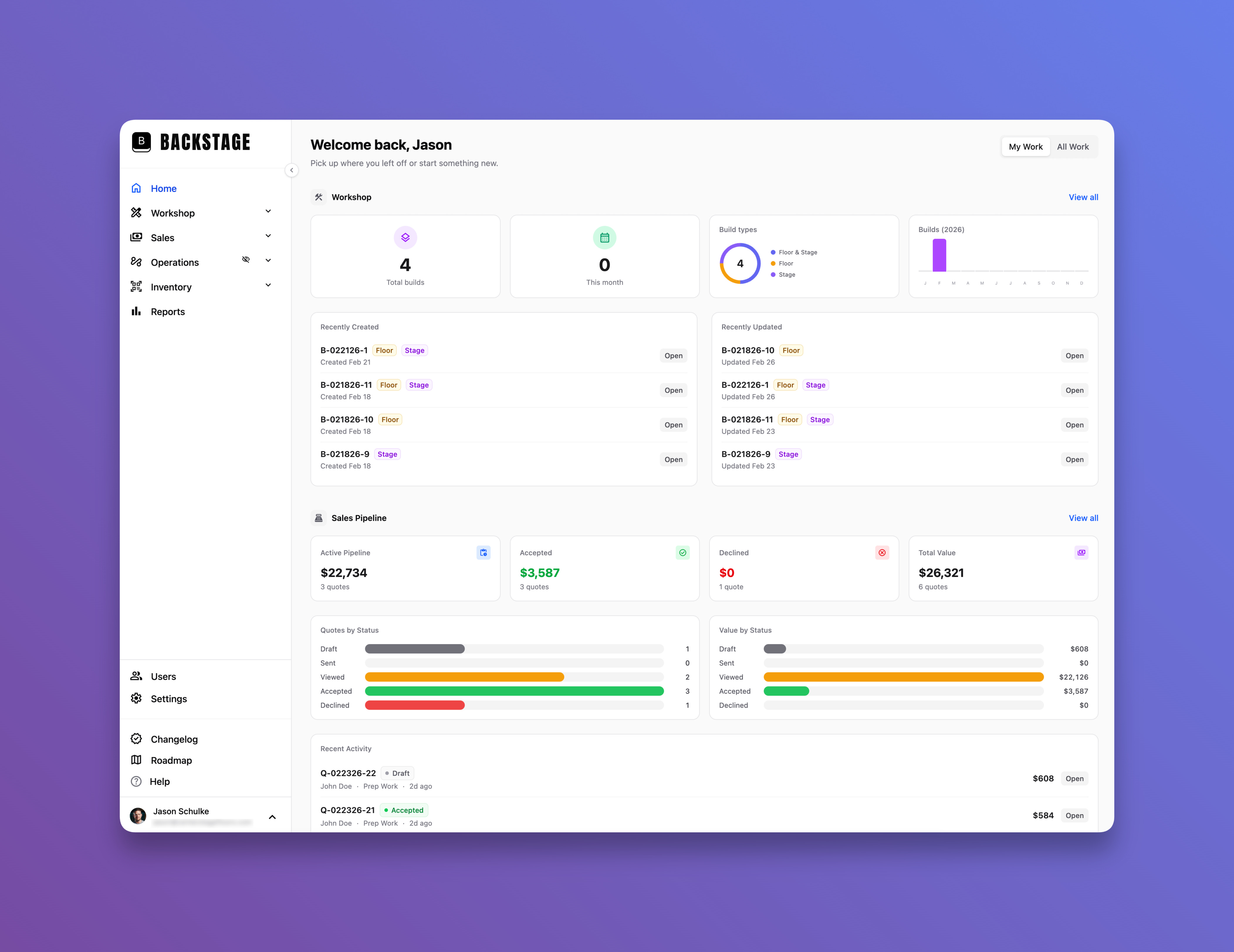
Right now I’m building a custom application called Backstage for a floor and stage manufacturing company. It’s my first true full-stack build: database, authentication, user roles and permissions, serverless functions, a proper application layer, and more.
The company produces a large volume of physical products, but the internal team using the system is fewer than ten people.
Because most of my background comes from SaaS companies like Airtable and Common Room, I initially approached the product the way I would a scaled platform. Last week, for example, I built out a full set of product documentation covering the entire application.
Then I stepped back and realized something; detailed documentation is not actually what this team needs.
In large SaaS products, documentation exists to support thousands of unknown users operating independently. The goal is scale. This product has eight users. They all know each other. And they can message me directly.
What they actually need looks more like:
Contextual help tied to specific parts of the product
Clear rules and exceptions for how operational workflows should work
Simple user roles and permissions that match how the team already operates
Notifications when important operational events happen in the system
Fast access to support when something is confusing
Large products need some of these things too, but the difference is the priority.
For a product with thousands of users, the goal is to build systems that scale.
For a product with eight users, the goal is to remove friction.
The most effective product education strategy isn’t always documentation, courses, or knowledge bases. Sometimes it’s simply designing the product so the right information appears at the moment it’s needed.
When the user base is small, I’m finding that the highest leverage work is less about scaling education but eliminating the need for it.